
Epoxy Flooring Ideas and Patterns in South Jersey
If you've been staring at a stained, cracked, or dusty concrete floor in your garage, basement, workshop, or commercial space — an epoxy coating can completely transform it. Here's everything South Jersey homeowners and business owners need to know before getting started.
In This Post
- Why Epoxy Flooring Is Worth It
- Garage Floor Epoxy Ideas
- Basement Epoxy Flooring
- Workshop & Home Gym Floors
- Commercial & Business Floors
- Popular Flake Colors & Styles
- What Epoxy Flooring Costs in South Jersey
- DIY vs. Professional Installation
- What to Expect During Installation
- Maintenance & Longevity
Why Epoxy Flooring Is Worth the Investment
Bare concrete is porous. It absorbs oil, road salt, moisture, and anything else that hits it. Over time it stains, dusts, cracks, and looks worse every year. An epoxy floor coating seals that surface permanently — creating a seamless, chemical-resistant, easy-to-clean finish that lasts 15 to 20 years with proper care.
Beyond durability, epoxy floors simply look better than any other concrete finish option. A full flake broadcast floor turns a dull gray slab into something that looks like it belongs in a showroom. And because the surface is non-porous, cleaning is as simple as a broom and an occasional mop.
Durability
Resists oil, gasoline, salt, household chemicals, hot tire pickup, and impact. A polyaspartic topcoat adds UV resistance and prevents yellowing — critical for spaces with sun exposure.
Easy Maintenance
No more staining or dusting. Sweep, mop with water and Simple Green, done. No sealing schedule like stamped concrete — the coating IS the seal.
Moisture Protection
Epoxy creates a vapor barrier that prevents moisture from wicking up through the slab — a major benefit for basements and garages in South Jersey where groundwater is a factor.
Home Value
A professionally coated garage or basement floor is a standout feature when selling. Buyers notice it immediately and it signals that the home has been well maintained.
Garage Floor Epoxy: The Most Popular Application
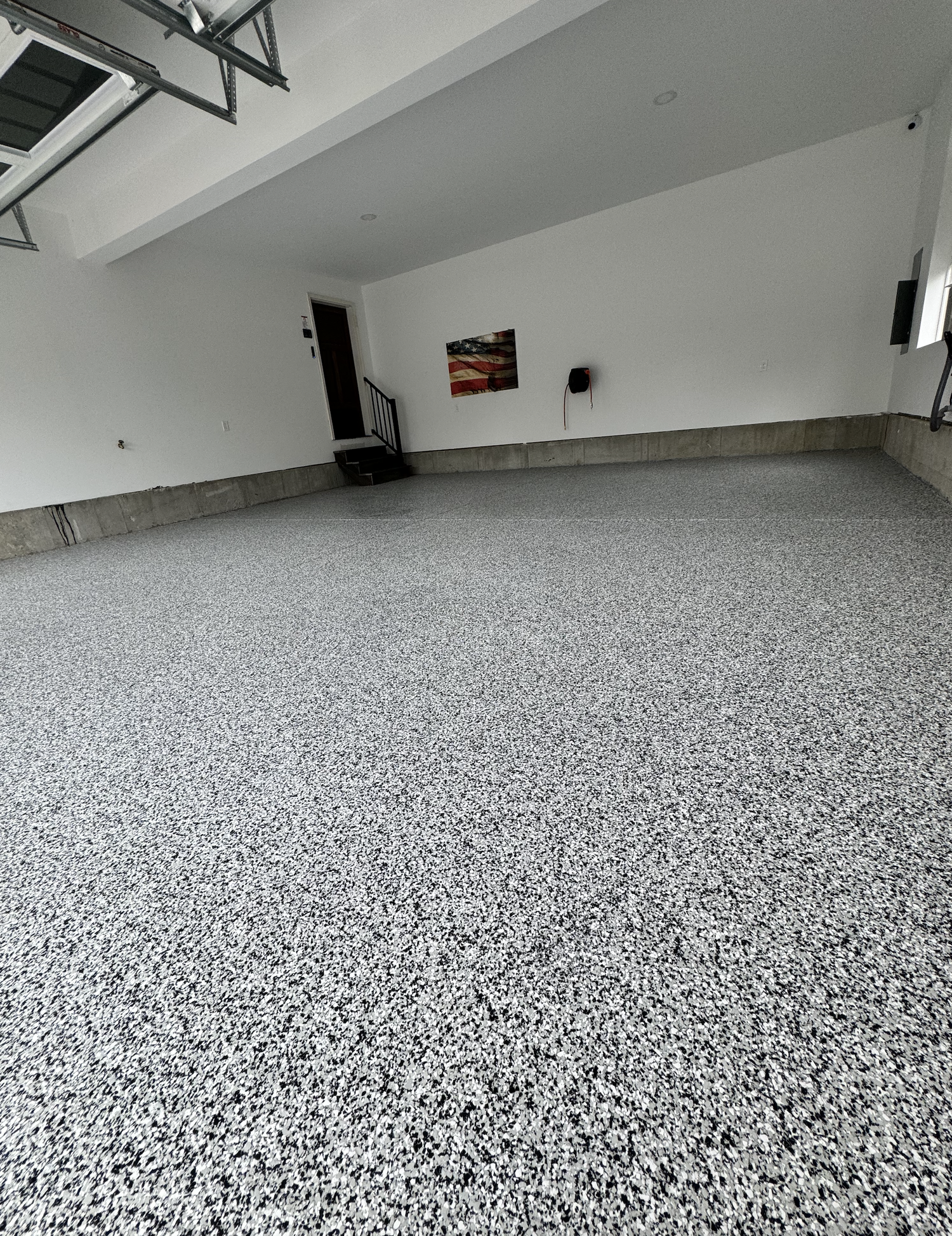
Garage floors take the most abuse of any surface in your home. Road salt tracked in every winter, oil drips, heavy tools, hot tires — bare concrete can't handle it long-term. That's why garage floor epoxy is the single most requested coating job we do across Gloucester and Camden Counties.
Design Ideas for Your Garage Floor
Full flake broadcast is the most popular style by far. The entire surface is covered in decorative vinyl flakes, creating a terrazzo-like finish that hides imperfections and provides natural texture for grip. You choose the flake size (1/4" is most popular) and the color blend.
Neutral blends like Saddle Tan, Dakota Grey, and Stonehenge are the go-to choices for homeowners who want a clean, classic look. If you want something bolder, blends like Tidal Wave (blue-grey) or Midnight (dark charcoal) make a statement.
Metallic epoxy is the premium option — a high-gloss, marble-like finish that looks stunning in a finished garage or man cave. Metallic floors are more design-forward and work best in spaces that double as entertaining or hobby areas.
Basement Epoxy Flooring: Clean, Bright, and Moisture-Resistant
Basements in South Jersey deal with a unique challenge: moisture. Whether it's humidity, minor seepage, or vapor transmission through the slab, bare concrete basements stay damp, collect dust, and develop that musty smell. An epoxy coating addresses all of it.
Why Epoxy Works in Basements
The epoxy base coat bonds directly to the concrete and creates a moisture vapor barrier that prevents water from wicking up through the slab. This alone eliminates the dusty, damp feeling that makes most unfinished basements unpleasant. Add a full flake broadcast and you've got a floor that looks finished and clean — even if the rest of the basement is still used for storage and utilities.
For homeowners converting basements into living space (home offices, playrooms, gyms), an epoxy floor is a practical alternative to tile or luxury vinyl plank. It's seamless, so there are no grout lines to collect mold, no seams for water to get under, and no subfloor required.
Workshop & Home Gym Floors
If you've got a workshop, hobby space, or home gym, an epoxy floor is one of the best upgrades you can make. Dropped tools, heavy equipment, chemical spills, and constant foot traffic — epoxy handles all of it without chipping or staining.
Workshop Benefits
A coated floor makes cleanup dramatically easier. Sawdust sweeps right off. Oil and solvent spills wipe up instead of soaking in. And the reflective surface of a flake floor bounces light around the room, making the entire space feel brighter without adding fixtures.
Home Gym Benefits
Epoxy with a textured flake finish provides excellent traction for workouts — no slipping during bodyweight exercises, and dropped weights won't damage the floor the way they'd crack bare concrete or gouge rubber tiles. It's also much easier to keep sanitary than foam or rubber mats.
Commercial & Business Floors
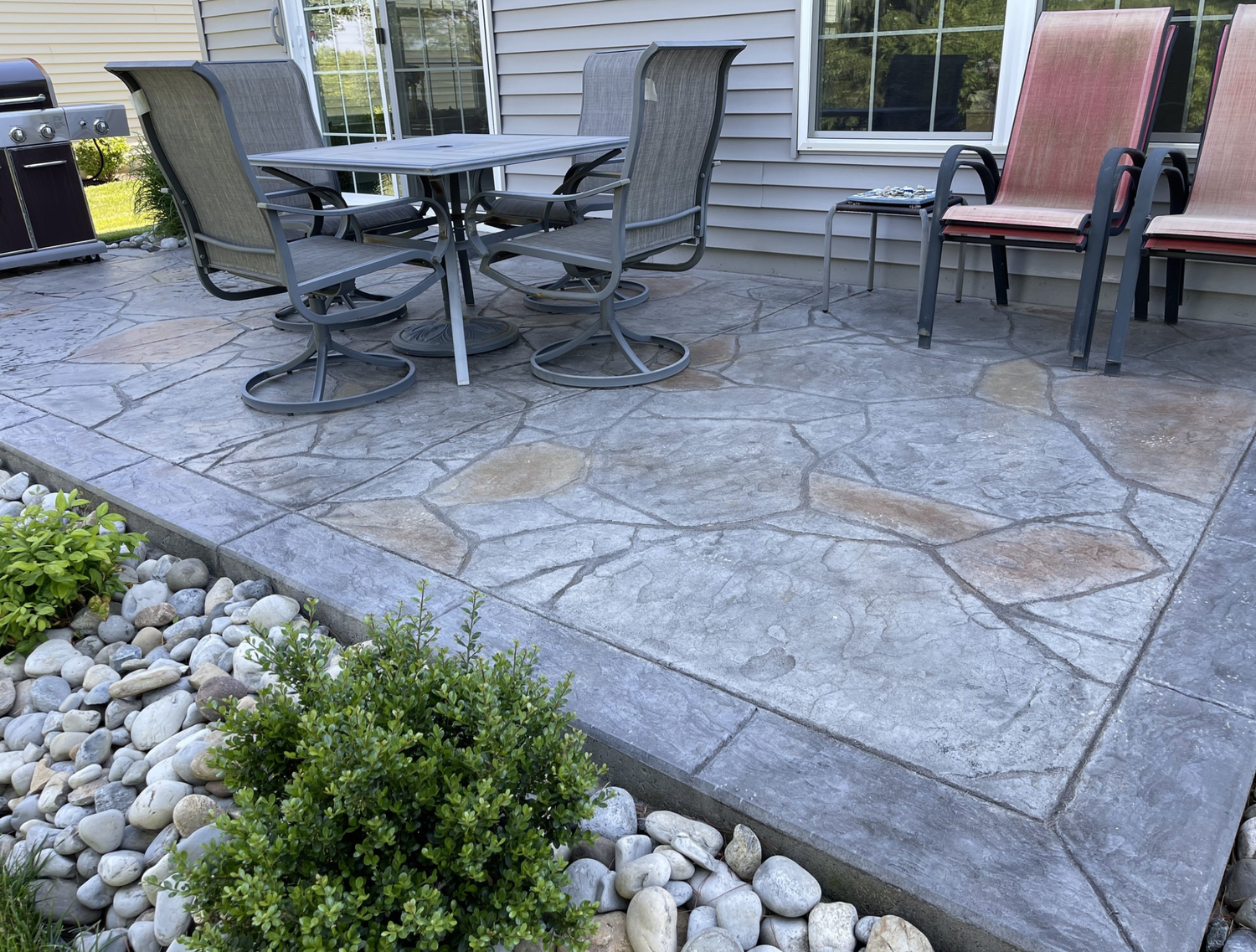
Epoxy isn't just for residential — it's one of the most practical flooring solutions for South Jersey businesses. From auto shops and warehouses to retail showrooms and restaurant kitchens, an epoxy floor system delivers the durability and cleanliness that commercial spaces demand.
Auto Shops & Service Bays
Chemical-resistant, easy to clean, and built to handle vehicle traffic, lifts, and tool drops. A flake floor also makes fluid leaks immediately visible for safety.
Warehouses & Storage
High-build epoxy systems handle forklift traffic, pallet loads, and heavy equipment. Non-porous surface prevents dust and makes the space OSHA-friendly.
Retail & Showrooms
Metallic or solid color epoxy creates a polished, professional look that impresses customers. Easy to maintain with just daily sweeping and weekly mopping.
Restaurants & Kitchens
Seamless, non-porous, and slip-resistant with the right additive. Meets health code requirements and withstands constant cleaning and commercial kitchen conditions.
Popular Flake Colors & Styles for South Jersey Homes
The flake blend you choose determines the overall look of your floor. We use Sika DecoFlake systems — professional-grade vinyl flakes available in 1/4", 1/8", 1/16", and 1" sizes. Here are the most popular combinations we install:
Top Picks for Garages
Saddle Tan and Tan & Bone — warm neutral tones that complement most home exteriors. Dakota Grey and Smoke for a cleaner, modern look. Starlight and Dalmatian from the Sika blend collection are our two most-requested blends overall.
Top Picks for Basements
Light Grey and Lunar brighten up low-light spaces. Snowfall creates an almost white, ultra-clean look that makes basements feel like finished living space.
Top Picks for Workshops
Graphite and Raven — darker floors hide heavy use better. Granite and Gravel offer a middle ground that balances hiding dirt with reflecting light.
Not sure what you want? Use our interactive color explorer on the Overlays & Epoxy page to browse every available color and blend before your consultation.
What Epoxy Flooring Costs in South Jersey
Typical Price Range
Typical garage floor • Includes prep, epoxy base, flake broadcast, and polyaspartic topcoat
Exact pricing depends on floor condition, system selected, and project access
For a standard 2-car garage (roughly 400–500 sq ft), expect to invest $4,000 to $9,000+ depending on the system and any concrete repair needed. Basements, workshops, and larger commercial spaces are priced based on square footage, floor condition, and the system selected.
The biggest variable is the condition of your existing concrete. A newer slab in good shape needs minimal prep. An older floor with cracks, moisture issues, or previous coatings requires more grinding, repair, and sometimes a moisture mitigation primer — all of which add to the scope.
DIY Epoxy Kits vs. Professional Installation
The big box stores sell epoxy kits for $100–$300. They look tempting. Here's what actually happens with most of them:
DIY Kit ($100–$300)
- Water-based epoxy — thin, weak bond
- Acid etch prep — inconsistent profile
- No moisture mitigation
- No polyaspartic topcoat
- Peels within 1–3 years in most garages
- Hot tire pickup is extremely common
- No warranty on labor or materials
Professional System ($4,000–$9,000+)
- 100% solids epoxy — thick, permanent bond
- Diamond grinding — proper mechanical profile
- Moisture vapor barrier base coat
- Full flake broadcast + polyaspartic topcoat
- Lasts 15–20+ years
- No peeling, no hot tire pickup
- Professional installation backed by experience
The difference comes down to surface prep and materials. Professional systems use diamond grinders to mechanically profile the concrete — creating thousands of tiny grooves that the epoxy locks into. DIY kits use acid etching, which barely scratches the surface and creates an inconsistent bond. Add South Jersey's freeze-thaw cycles and road salt, and a DIY coating simply can't hold up.
What to Expect During Installation
Here's how a typical professional epoxy floor project goes from start to finish:
Day 1 — Prep & Base Coat: We diamond-grind the entire surface to create the proper concrete profile. All cracks get repaired, expansion joints are addressed, and the floor is cleaned thoroughly. Then we apply the 100% solids epoxy base coat and broadcast your chosen flake blend into the wet coating. Full flake broadcast means the entire floor is covered — no bare spots.
Day 2 — Topcoat & Cure: We scrape and lightly sand the flake surface for smoothness, then apply two coats of clear polyaspartic topcoat. This is what gives the floor its high-gloss finish, UV resistance, and chemical protection.
After Installation: You can walk on the floor within 24 hours. Light use (moving items back in) at 48 hours. Vehicle traffic at 72 hours. Full chemical resistance develops over 7 days.
Maintaining Your Epoxy Floor
One of the best things about an epoxy floor is how little maintenance it needs compared to bare concrete, tile, or even stamped concrete. Here's the full routine:
Weekly: Sweep or blow out debris. That's it for most weeks.
Monthly: Mop with warm water and a mild cleaner (Simple Green works great). No special products needed.
As Needed: Wipe up oil, chemicals, or spills promptly — they won't stain, but cleaning them quickly keeps the surface looking its best.
What to Avoid: No harsh abrasives, no steel wool, no ammonia-based cleaners. Don't drag sharp metal objects across the surface. Use furniture pads under heavy items that sit in one place.
That's the entire maintenance program. No resealing every 2–3 years like stamped concrete. No polymeric sand replacement like pavers. Just sweep and mop.
Ready to Upgrade Your Floor?
We offer free on-site estimates for garage floors, basements, workshops, and commercial spaces across South Jersey. Let's look at your concrete and give you a clear price.
Request Free Estimate Call (856) 223-1100Serving Mullica Hill, Washington Township, Swedesboro, Woolwich, Harrison Township, Cherry Hill, Haddonfield, Voorhees, Sewell, Turnersville, Deptford, West Deptford, Mantua, Pitman, Glassboro, Woodbury, Collingswood, Bellmawr, Haddon Township, Marlton, Moorestown, Medford, Mt. Laurel, Barrington, and surrounding South Jersey communities.