
Stamped Concrete vs Pavers: Which is Better for South Jersey Homeowners?
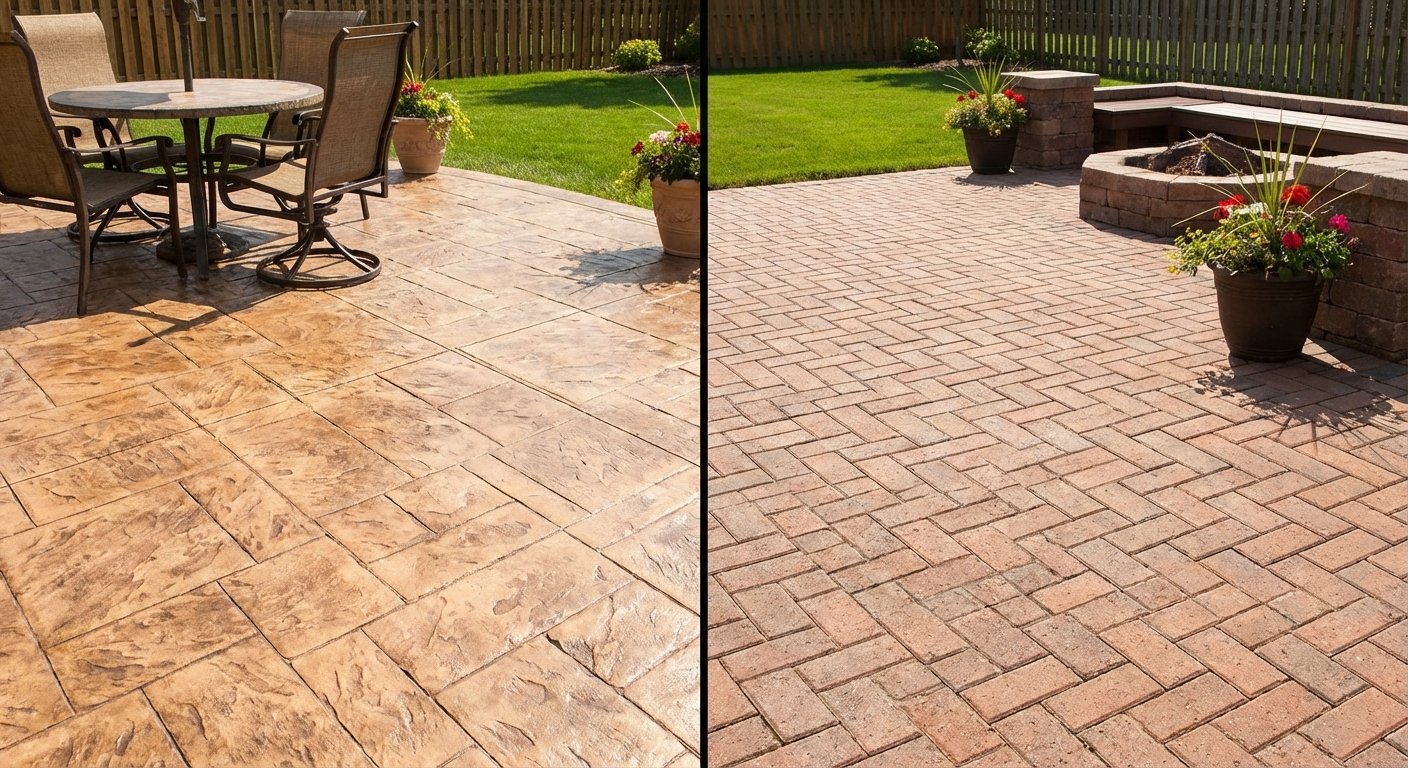
Stamped Concrete Patio VS Paver Patio South Jersey Guide
It's the most common question we hear: "Should I go with stamped concrete or pavers?" After 43 years installing both across South Jersey, here's our honest breakdown — because the right answer depends on your budget, your property, and how you plan to use the space.
At Patrick Breen Masonry & Concrete, we're one of the few contractors in Gloucester and Camden Counties who specialize in both stamped concrete and paver installations. We're not going to push you toward one or the other — we want you to make the right choice for your home. Here's everything you need to know.
The Quick Answer
For most South Jersey homeowners looking for a beautiful patio, driveway, or walkway at the best value, stamped concrete wins on cost, design flexibility, and long-term maintenance. Pavers win on repairability and certain aesthetic preferences. Both last decades when installed properly.
Cost Comparison: Real South Jersey Numbers
Let's talk actual dollars. These are 2026 prices based on projects we've completed in Gloucester and Camden Counties:
Stamped Concrete Pavers Material + labor per sq ft $13 – $22 $18 – $35+ Average 300 sq ft patio $4,500 – $5,500 $6,000 – $9,000+ Average 600 sq ft driveway $8,000 – $12,000 $12,000 – $18,000+ Resealing (every 2-3 years) $1 – $2/sq ft N/A Joint re-sanding (every 1-2 years) N/A $0.50 – $1/sq ft 10-year total cost (300 sq ft patio) ~$6,000 – $7,500 ~$7,500 – $11,000
The upfront savings with stamped concrete are significant — typically 30-40% less than a comparable paver installation. Over 10 years, the gap narrows slightly because of resealing costs, but stamped concrete still comes out ahead for most homeowners.
Appearance and Design
Stamped Concrete
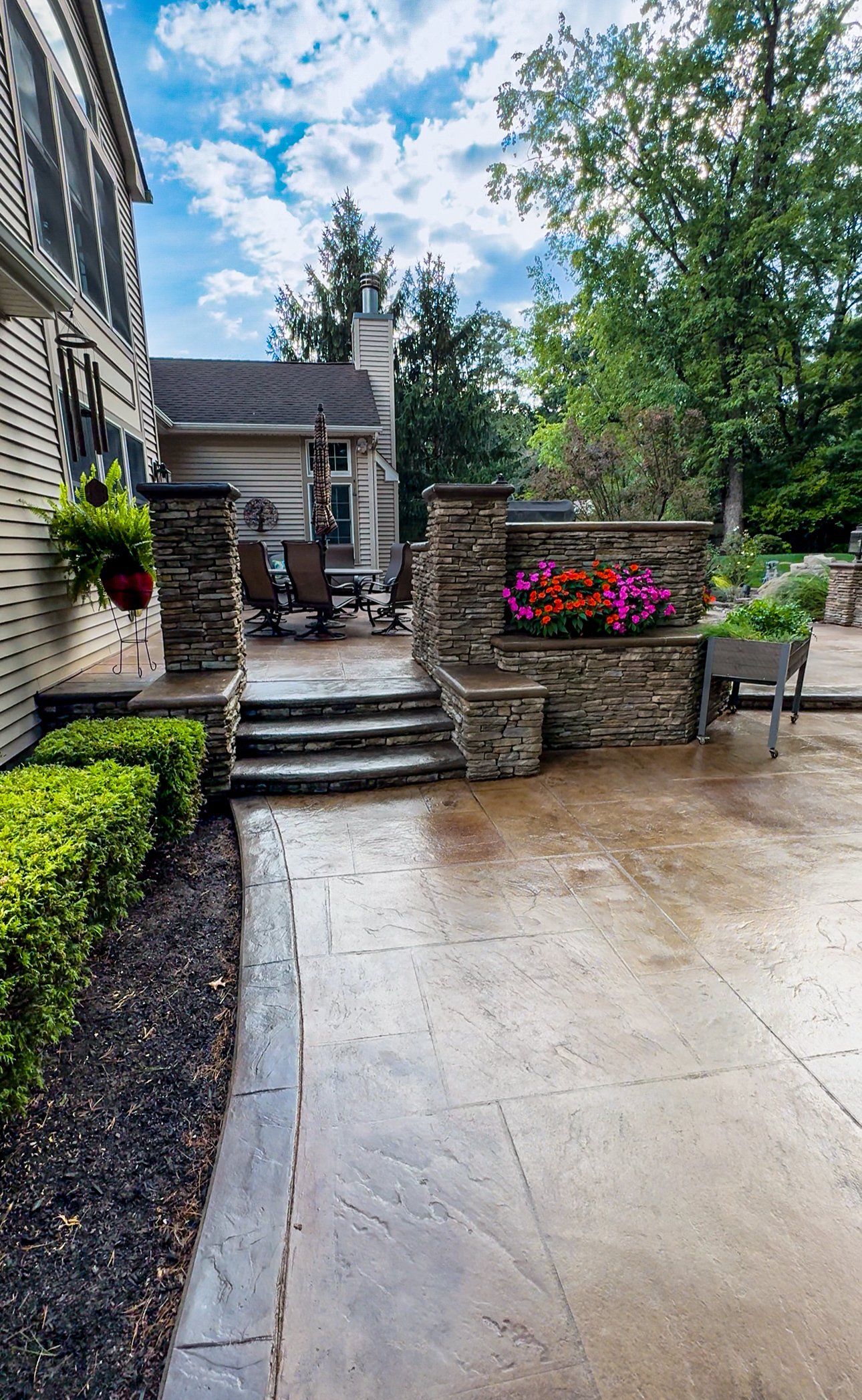
Stamped concrete is poured as one continuous surface, then imprinted with patterns and colored to replicate natural stone, brick, slate, or wood. The result is seamless — no joints, no gaps, no visible edges between pieces.
Design advantages:
Unlimited shapes — curves, circles, flowing organic shapes are easy
Seamless surface with no joints or gaps
Color is customizable — integral color, hardener, antiquing release
Borders and multi-pattern layouts create high-end looks
Can mimic materials that don't exist as pavers (wood plank, random flagstone)
Design limitations:
Color can fade over time without resealing
Surface texture is imprinted, not three-dimensional like real stone
Difficult to match if you expand the patio later
Pavers
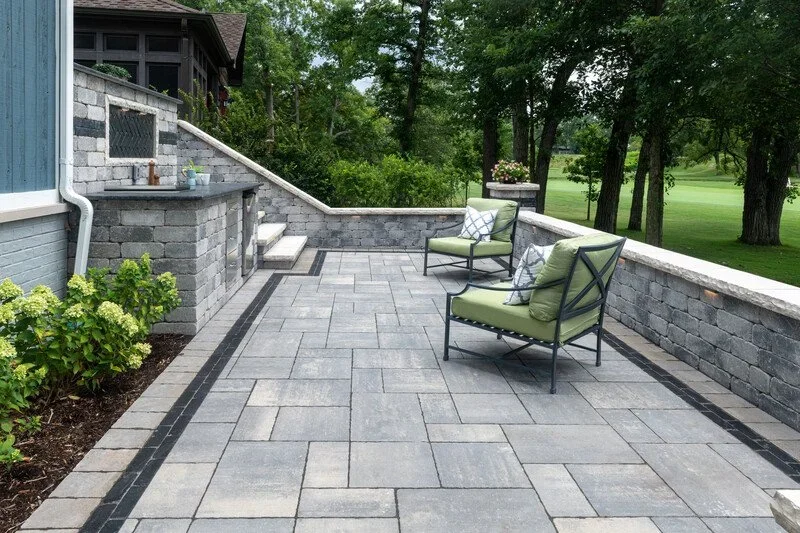
Pavers are individual manufactured pieces (concrete, brick, or natural stone) laid on a compacted sand and stone base. Each piece is separate, creating a modular look.
Design advantages:
Three-dimensional texture — each piece has real depth and edges
Wide variety of shapes, sizes, and colors from manufacturers like Techo-Bloc, Belgard, and Cambridge
Easy to replace individual damaged pieces
Natural stone pavers (bluestone, travertine) have an unmistakable premium look
Design limitations:
Limited to manufactured shapes — true curves require extensive cutting
Joints between pavers collect debris, weeds, and insects
Color variation between production batches can be an issue for future additions
Herringbone and complex layouts require more cutting and waste
Durability in South Jersey's Climate
This is where installation quality matters more than the material itself. Both stamped concrete and pavers can last 25+ years in our freeze-thaw climate — or fail within 5 years if installed poorly.
How Stamped Concrete Handles Our Winters
South Jersey's freeze-thaw cycles (typically 40-60 cycles per winter) are the biggest threat to any concrete surface. Properly installed stamped concrete handles this well because:
Air-entrained mix allows microscopic expansion when water freezes inside the slab
Continuous reinforced slab distributes stress evenly — no individual pieces to shift
Proper control joints direct any cracking to predetermined, inconspicuous locations
Sealer prevents moisture penetration that causes surface spalling
The risk: If a crack develops in stamped concrete, it affects the continuous surface and can be visible. Cracks can be repaired, but the repair may be noticeable depending on the pattern and color.
How Pavers Handle Our Winters
Pavers handle freeze-thaw differently:
Individual pieces can shift independently, accommodating ground movement
Flexible sand base allows some settling without cracking individual pavers
Damaged pieces can be replaced individually
The risk: Frost heave can push individual pavers out of alignment, creating trip hazards. Joint sand washes out over time, allowing pavers to shift and weeds to grow. In clay-heavy areas like Mullica Hill and Washington Township, heaving can be a recurring issue without adequate base depth.
Maintenance: The Real Long-Term Difference
Stamped Concrete Maintenance
Reseal every 2-3 years — Apply a fresh coat of sealer to protect color and prevent moisture damage. Cost: $1-$2 per square foot if hired out, or a DIY weekend project.
Clean periodically — Hose off or power wash at low pressure once or twice a year.
That's it. No weeds, no shifting, no re-sanding.
Paver Maintenance
Re-sand joints annually or biannually — Polymeric sand washes out, especially in heavy rain areas. Without it, pavers shift and weeds invade.
Weed control — Even with polymeric sand, weeds find their way in. Regular treatment or manual removal is needed.
Reset shifted pavers — Freeze-thaw and tree roots can push pavers out of alignment. Individual pieces need to be pulled up, base re-compacted, and reset.
Ant hills and insects — Sand-set pavers are a magnet for ants and other burrowing insects that undermine the base.
Edge restraints — The border restraints that hold pavers in place can shift or fail over time, causing the entire perimeter to creep outward.
This is the factor that surprises most homeowners. Pavers look maintenance-free when first installed, but the ongoing joint care and occasional paver resetting adds up in time and money.
Best Applications for Each
Choose Stamped Concrete When:
Budget is a priority — You want the stone or brick look without the premium price
You want a seamless surface — Pool decks, large patios, flowing walkways
Low maintenance matters — You don't want to deal with weeds and shifting
Design includes curves — Stamped concrete handles organic shapes effortlessly
The area is large — Cost savings compound on bigger projects
Choose Pavers When:
Future access matters — If utilities run under the patio, pavers can be pulled up and relaid
You want natural stone — Real bluestone or travertine pavers have a look stamped concrete can't fully replicate
Phased construction — You want to build in stages over multiple seasons
Driveway with heavy vehicles — Thick pavers on a proper base handle heavy loads well
You prefer the modular look — Some homeowners simply prefer the defined edges and dimensional texture of individual pieces
Or Combine Both
One of our favorite approaches is combining stamped concrete and pavers in the same project. For example:
Stamped concrete patio with a paver border and sitting wall cap
Paver driveway with stamped concrete walkway leading to the front door
Stamped concrete pool deck with natural stone coping
This gives you the best of both worlds and creates visual interest through material contrast.
Questions to Ask Any Contractor
Whether you choose stamped concrete or pavers, ask these questions before signing a contract:
What base preparation do you use? Minimum 4 inches of compacted stone for patios, 6+ inches for driveways. In clay soil areas (much of Gloucester County), 6 inches minimum for patios.
Do you use air-entrained concrete? For stamped concrete, this is mandatory in New Jersey. If they don't know what this means, walk away.
What's included in the price? Get specifics on tear-out, base prep, reinforcement, sealer, and cleanup.
Can I see recent local projects? Any quality contractor should have photos and references from your area.
Are you licensed and insured? In New Jersey, home improvement contractors must be registered with the Division of Consumer Affairs. Ask for their NJ HIC registration number.
The Bottom Line
Both stamped concrete and pavers create beautiful outdoor spaces that last for decades. For most South Jersey homeowners, stamped concrete delivers the best combination of appearance, value, and low maintenance. But there are situations where pavers are the better choice — and a good contractor will tell you that honestly.
At Patrick Breen Masonry & Concrete, we install both. We'll recommend what's best for your specific project, not what's best for our bottom line. That's how a family business survives 43 years.
Ready to see what works best for your project?
Build Your Project Online — Visualize patterns, colors, and get a ballpark estimate.
Request a Free Estimate — We'll come to you, measure, and give you honest options.
Call us — (856) 223-1100
Patrick Breen Masonry & Concrete — Mullica Hill, NJ — Since 1983 — NJ Lic #13VH00144300