
Retaining Walls in South Jersey: Types, Costs & What Every Homeowner Should Know
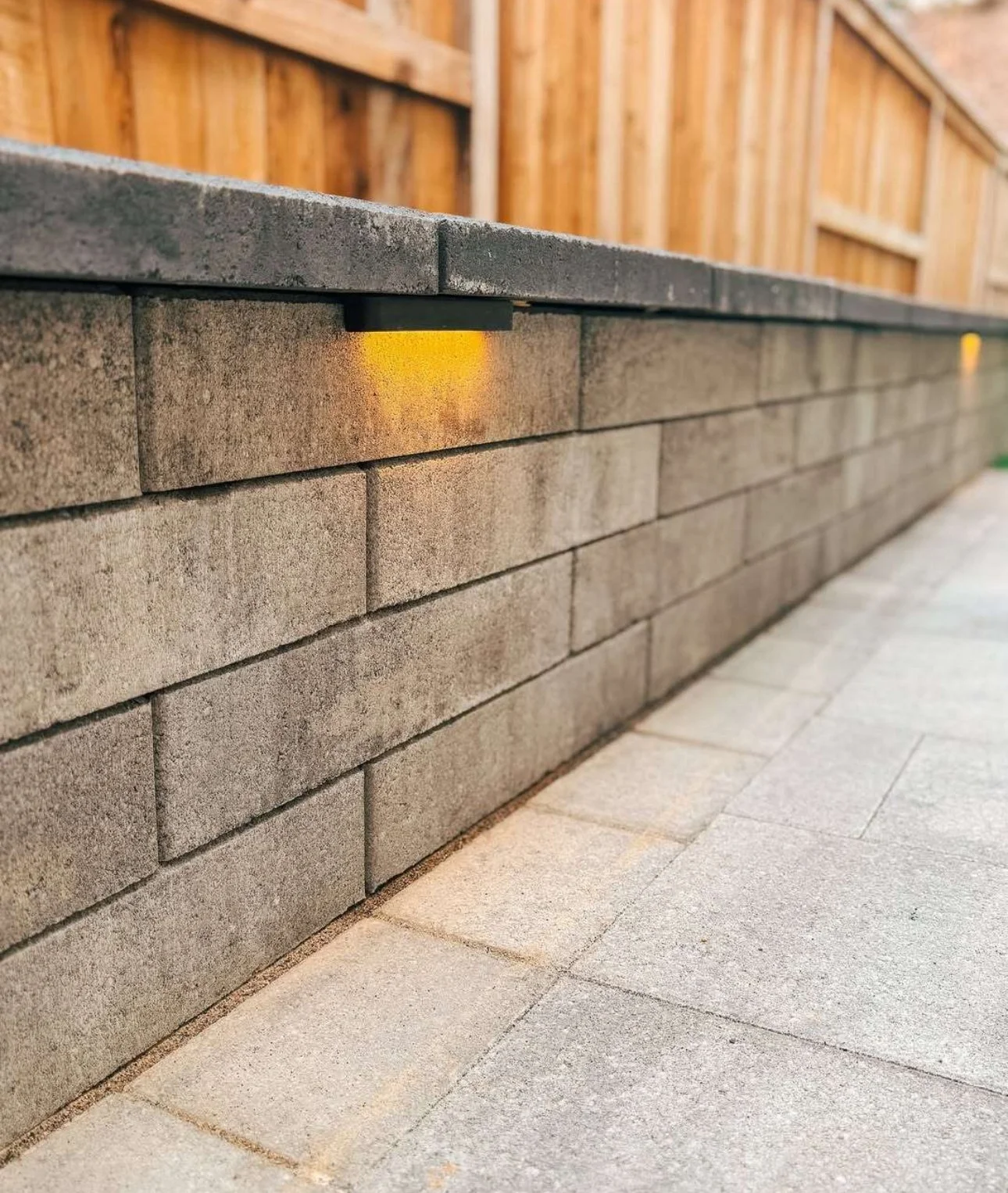
Techo Bloc Raffinato Retaining Wall with lighting
If your yard slopes, you need a retaining wall — or you will eventually. Gravity and water don't stop working just because you'd prefer a flat backyard. Whether you're preventing erosion, creating usable space on a hillside, or adding a dramatic landscape feature, retaining walls are one of the most functional and visually impactful hardscape investments you can make. Here's the complete guide for South Jersey homeowners.
What Does a Retaining Wall Actually Do?
A retaining wall holds soil in place against gravity. Without one, sloped terrain erodes over time — washing out landscaping, undermining foundations, flooding lower areas, and slowly eating away at your usable yard space.
But retaining walls do more than prevent erosion. They:
Create flat, usable space on sloped lots — turn an unusable hillside into a terraced patio area
Protect foundations by directing water and soil pressure away from your home
Prevent landscape damage by keeping mulch beds, gardens, and plantings from washing downhill
Add dramatic visual impact — a well-built stone retaining wall transforms an ordinary yard into a layered, architectural landscape
Increase property value — functional retaining walls with quality materials are a significant value-add
Types of Retaining Walls
Segmental Block Walls (Most Common)
Interlocking concrete blocks (like Techo-Bloc, Belgard, or Cambridge wall systems) that stack without mortar. The blocks interlock with pins or a lip system that provides structural connection between courses.
Best for: Walls up to 4 feet tall (taller with engineering), garden borders, patio edges, tiered landscaping Cost: $35 – $65 per square foot of wall face (installed) Lifespan: 30-50+ years
Advantages:
Wide variety of colors, textures, and styles
Relatively fast installation
No mortar means flexibility during freeze-thaw cycles
Blocks can be replaced individually if damaged
DIY-friendly for small walls under 2 feet
Popular products we install:
Techo-Bloc Mini-Creta and Semma — clean, modern profiles
Belgard Belair and Celtik — natural stone aesthetics
Cambridge MaytRx and Olde English — traditional looks
Natural Stone Walls
Real fieldstone, bluestone, or limestone stacked either dry (no mortar) or wet (with mortar). The most timeless and premium option.
Best for: Historic properties, high-end landscapes, walls that need to look like they've been there forever Cost: $50 – $100+ per square foot of wall face Lifespan: 50-100+ years (stone literally lasts centuries)
Advantages:
Unmatched natural beauty — every stone is unique
Ages gracefully, getting better looking over time
Moss and patina add character
Strongest and most durable option
Considerations:
Higher cost than manufactured block
More labor-intensive installation
Heavier — may require equipment access
Harder to find consistent material for large projects
Poured Concrete Walls
Formed and poured concrete walls, either left as finished concrete or veneered with stone or stucco.
Best for: Structural walls, walls over 4 feet, walls supporting significant loads (driveways, patios), walls that will be veneered Cost: $40 – $75 per square foot (before veneer) Lifespan: 40-60+ years
Advantages:
Strongest structural option
Can be any height with proper engineering
Smooth surfaces ready for veneer application
Best for walls supporting vehicle loads (driveway retaining)
Timber Walls
Pressure-treated landscape timbers stacked horizontally and secured with rebar or deadman anchors.
Best for: Budget-friendly garden borders, informal landscape walls under 3 feet Cost: $20 – $35 per square foot Lifespan: 15-20 years (wood eventually rots even when treated)
Our recommendation: We generally steer homeowners away from timber walls. For a modest cost increase, segmental block walls last 2-3 times longer and don't deteriorate. The upfront savings with timber disappear quickly when you factor in replacement costs.
Retaining Wall Costs in South Jersey
Wall Height Segmental Block Natural Stone Poured Concrete Under 2 feet $35 – $50/sq ft $50 – $75/sq ft Overkill — use block 2-4 feet $45 – $65/sq ft $65 – $100/sq ft $50 – $75/sq ft Over 4 feet $55 – $80/sq ft* $80 – $120+/sq ft* $60 – $90/sq ft*
*Walls over 4 feet require engineered design — add $1,000-$3,000 for engineering fees.
Example project costs:
20-foot long x 2-foot tall garden wall (40 sq ft face): $1,400 – $2,600
30-foot long x 3-foot tall patio retaining wall (90 sq ft face): $4,000 – $6,500
40-foot long x 4-foot tall hillside wall (160 sq ft face): $7,200 – $12,000
Additional cost factors:
Drainage system behind the wall: $15 – $25 per linear foot (mandatory on any wall over 2 feet)
Geogrid reinforcement for taller walls: $3 – $6 per square foot
Cap stones on top of the wall: $10 – $20 per linear foot
Tiered walls (two shorter walls instead of one tall one): More material but potentially avoids engineering requirement
The Most Important Part You Can't See: Drainage
Ask any experienced mason what causes retaining wall failure, and the answer is always the same: water.
Water collects behind the wall, saturates the soil, creates hydrostatic pressure, and pushes the wall forward. In winter, that water freezes and expands, multiplying the force. Without proper drainage, even the best-built wall will eventually lean and fail.
Proper drainage includes:
Gravel backfill — 12+ inches of clean drainage stone behind the wall, from footing to within 6 inches of the top
Filter fabric — Geotextile fabric between the drainage stone and the native soil to prevent clay from clogging the stone
Perforated drain pipe — 4-inch perforated PVC at the base of the wall, laid in gravel, sloped to daylight or a drainage outlet
Weep holes — Openings in the wall face every 6-8 feet that allow water to escape through the wall
Skipping drainage saves a contractor a few hundred dollars. It costs the homeowner thousands when the wall fails 5-7 years later. We include full drainage on every retaining wall over 2 feet.
Permits and Engineering
When Do You Need a Permit?
Rules vary by South Jersey municipality, but general guidelines:
Walls under 30 inches (2.5 feet) — Typically no permit required
Walls 30 inches to 4 feet — Permit may be required; check with your municipality
Walls over 4 feet — Almost always require a building permit AND engineered drawings signed by a licensed PE
When Do You Need an Engineer?
Any wall over 4 feet tall
Any wall supporting a surcharge (driveway, structure, or slope above the wall)
Walls on or near property lines
Walls near structures (homes, pools, sheds)
Walls in areas with known soil instability
We coordinate with local structural engineers for walls that require design. The engineering fee ($1,000-$3,000) is a small fraction of the wall cost and ensures the wall is built to handle the actual loads it'll face.
Creative Uses for Retaining Walls
Beyond basic soil retention, walls add architectural interest to your landscape:
Seat Walls
A 18-20 inch tall retaining wall at the edge of a patio doubles as built-in seating. Add a smooth bluestone or granite cap for comfort, and you've eliminated the need for extra chairs during parties.
Cost add for seat wall cap: $15 – $30 per linear foot
Terraced Planting Beds
Two or three short walls (18-24 inches each) stepping up a hillside create dramatic terraced garden beds. Each level can feature different plantings, and the walls prevent mulch and soil from washing downhill.
Outdoor Kitchen and Fire Pit Surrounds
The walls around outdoor kitchens and built-in fire pits are essentially short retaining walls with veneer. We build these as part of our outdoor living projects, matching the wall material to the patio and home.
Driveway and Walkway Borders
A low retaining wall along a driveway or walkway creates a clean edge, holds landscaping in place, and adds curb appeal. Especially effective on sloped front yards where mulch beds tend to wash onto the driveway.
Privacy Walls
A 3-4 foot retaining wall topped with a fence or hedge provides privacy screening while solving a grade change. The combination of wall and fence is more stable than a fence alone on sloped ground.
Building a Retaining Wall That Lasts
The difference between a wall that lasts 10 years and one that lasts 50 comes down to what's behind and beneath it — the parts nobody sees:
Proper footing — A compacted stone base (6-8 inches deep, 24 inches wide) or poured concrete footing for taller walls. The first course of block should be partially buried for stability.
Drainage — Full gravel backfill, filter fabric, and perforated drain pipe. Non-negotiable.
Batter — Retaining walls should lean slightly into the hillside (about 1 inch per foot of height). This uses gravity to the wall's advantage.
Geogrid — For walls over 3-4 feet, layers of geogrid (a polymer mesh) extend from between block courses back into the compacted soil behind the wall, anchoring the wall to the earth mass it's retaining.
Proper cap — Capstones should be glued with construction adhesive to prevent shifting and to seal the top of the wall from water infiltration.
Your Retaining Wall Project
Patrick Breen Masonry & Concrete builds retaining walls of every type and size across South Jersey. From a simple garden border to an engineered hillside wall system, we have 43 years of experience holding South Jersey's soil where it belongs.
Request Your Free Estimate — We'll assess your site, recommend the right wall type, and give you a detailed quote.
Call: (856) 223-1100
Patrick Breen Masonry & Concrete — Mullica Hill, NJ — 43+ Years — NJ Lic #13VH00144300